 Ran Hothambaya
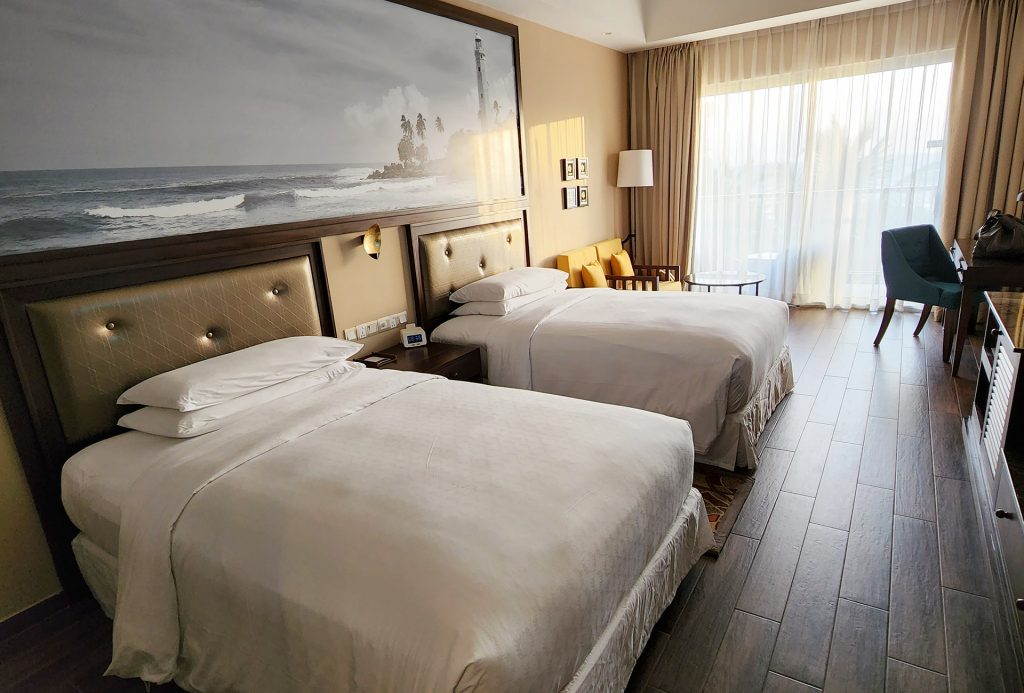
 Ran Hothambaya headed to Kosgoda with his friends recently. The hotel was the Sheraton Kosgoda, which was offering a nice discount on bookings. It’s a posh hotel with a sort of business vibe to it, but it was almost deserted on the Friday we got there.
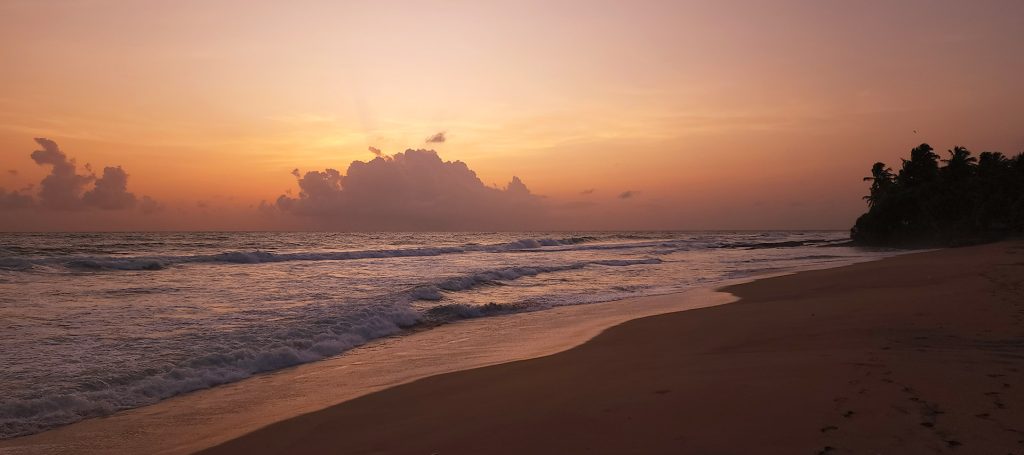
After changing into shorts and rubber slippers we headed to the beach to catch the sunset. We had access to a pristine stretch of beach that was completely deserted. We were the only people as far as the eye could see.
Soon an old man in a sarong appeared, his skin darkened by decades of sun, like a piece of old karawala. He started talking to us about the turtles and said he could arrange for us to see them laying eggs in the night. He said the Russian tourists had all been whisked away after the mess created by the Government grounding an Aeroflot plane on a court order. Apparently, last week the beach had been full of Russian tourists. We enjoyed a long walk up and down the beach, watched hermit crabs scuttling about and tried not to step on them, let the waves and the sand exfoliate and destress our city-tired feet, and watched the sun go down. The waves were pretty rough and started to come in, so we headed back as the light started to fade.
The old man said, “They call me Lokka (boss). You can find me anytime if you need anything.” I asked him to call us if the turtles came in the night to lay eggs. The chances were thin as it looked like it would rain. Lokka said, they didn’t lay when it rained.
Then it was back to the room to stand under a warm rain shower and wash away the travel fatigue and the stress from another week of living in Colombo.
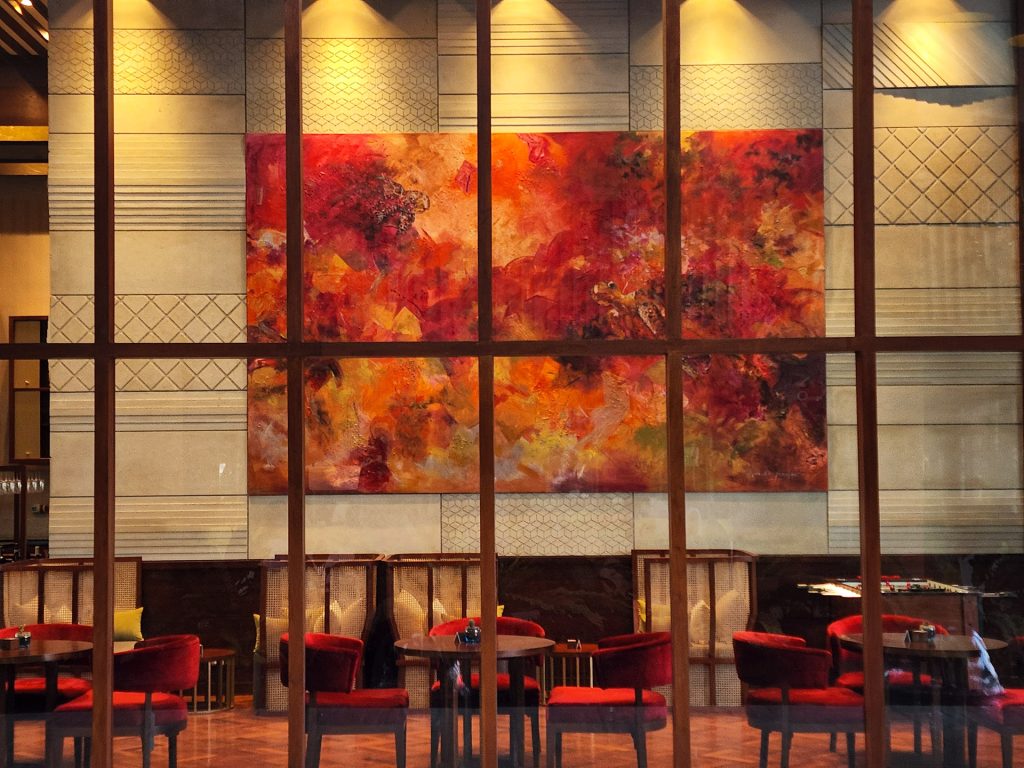
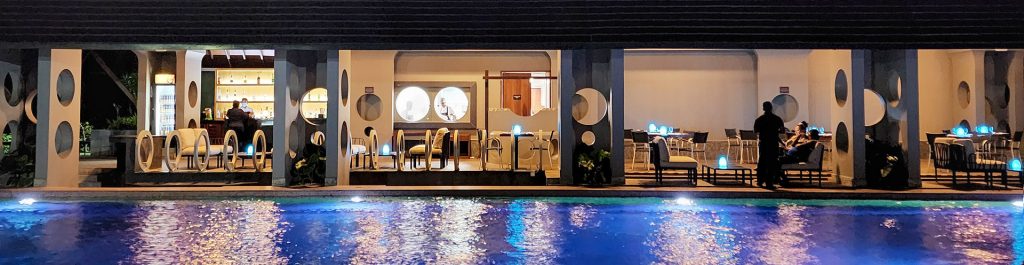
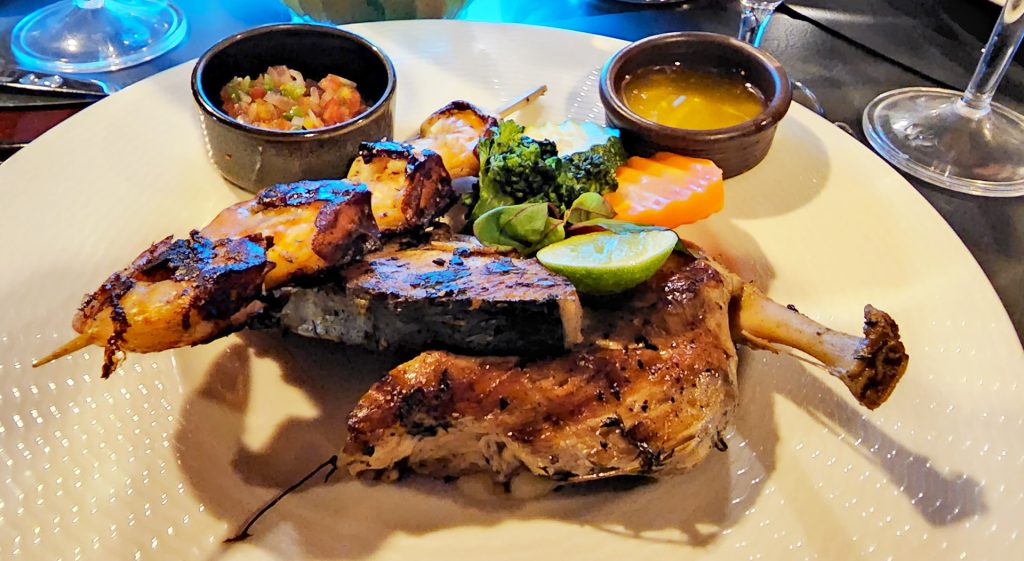
Since there weren’t many guests, dinner was served at the poolside Olive restaurant. We ordered a pitcher of Pimms cocktail that went down nicely with the newfound sense of relaxation. We were served a mouthwatering 5-course dinner that included a crab amuse bush, a roast duck salad, cream of spinach soup, mixed grill, and desserts that included banana fritters or a fresh fruit salad. With few guests, the ambiance was excellent and the attentive staff provided a true fine dining restaurant.
Then it was off to bed in those awesome beds that seemed to swallow you up in a cosy hug. Lokka did not call, and it was just as well because we were in no mood to get out of bed again.
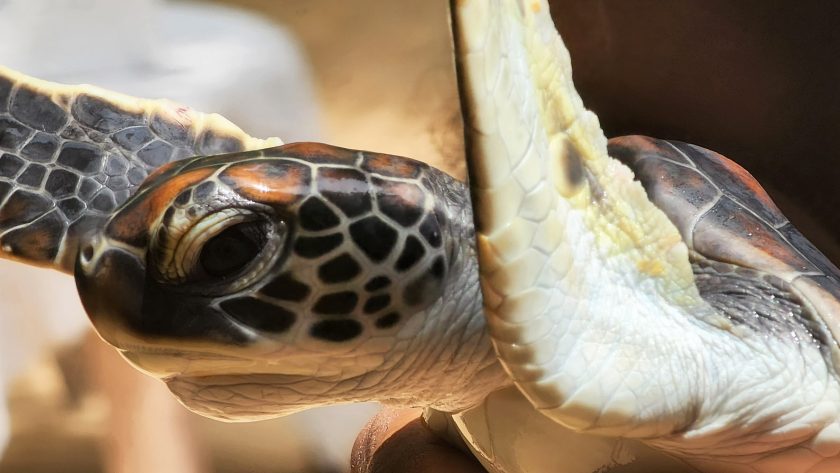
After a massive “American” breakfast, which is an English breakfast with a whole lot of decadence piled on top, we headed to the beach to have a look at some turtles. Lokka was out with several buddies and they made a strong appeal not to go to “that commercial hatchery” and to come to their hatchery which did not charge fees and was run on donations only. We were in a compliant mood, so we followed them into the village. The hatchery was a small affair – it was obvious they were operating on a shoestring budget. It comprised a sandy section with labels indicating dates on which eggs had been buried and several rough concrete tanks filled with seawater. There were small hatchlings a few days old that were being kept for release into the ocean, and a few larger specimens with fishing net injuries that they were trying to nurse back to health.
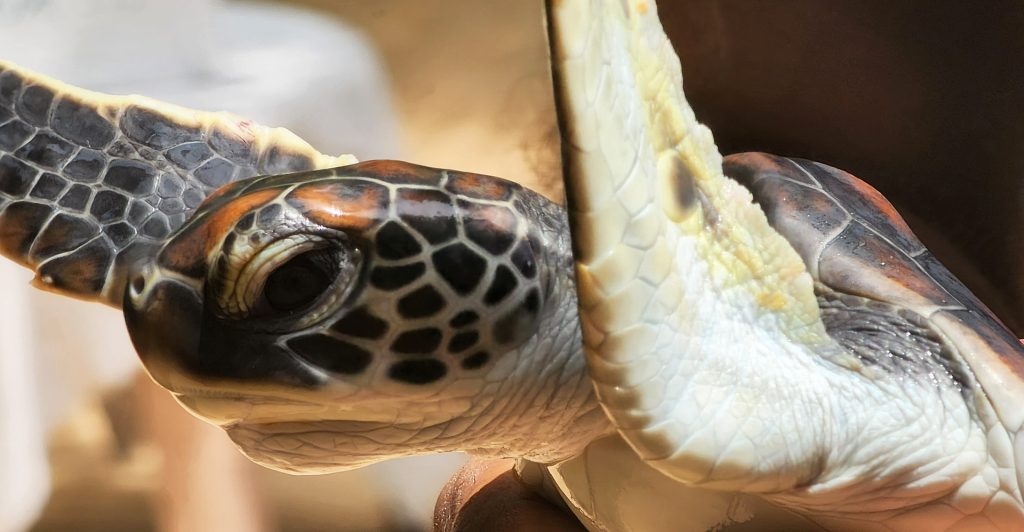
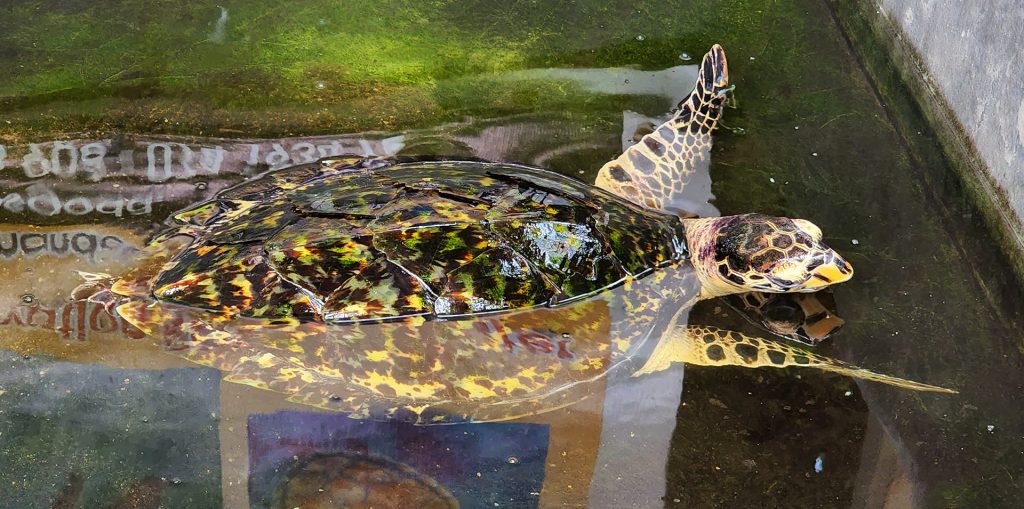
We made a donation to the hatchery, for which the men thanked us profusely saying these turtles will eat because of your kindness.
We skipped lunch, checked our emails, played some cards and took a nice one hour afternoon nap. Around 3.30pm it was time to go looking for a riverboat safari. We piled into a large diesel tuk tuk that could take all four of us, and headed about 8km south to one of the many boat jetties. Our tuk tuk driver took us to a place called Captain’s Deck. They had a great many worn-out fibreglass boats tethered to a makeshift jetty. We were the only customers there. They agreed to take us for Rs. 4,500 which seemed a pretty reasonable fee in the economic environment of fuel shortages and huge price increases in petrol. We donned our life jackets and settled ourselves into our boat for our river adventure.
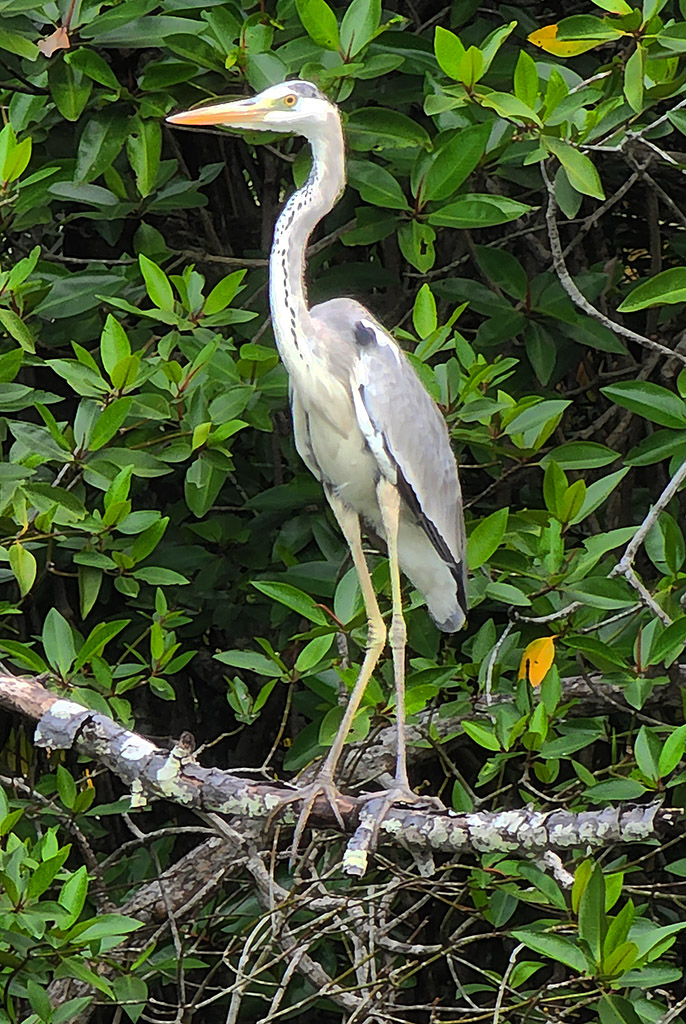
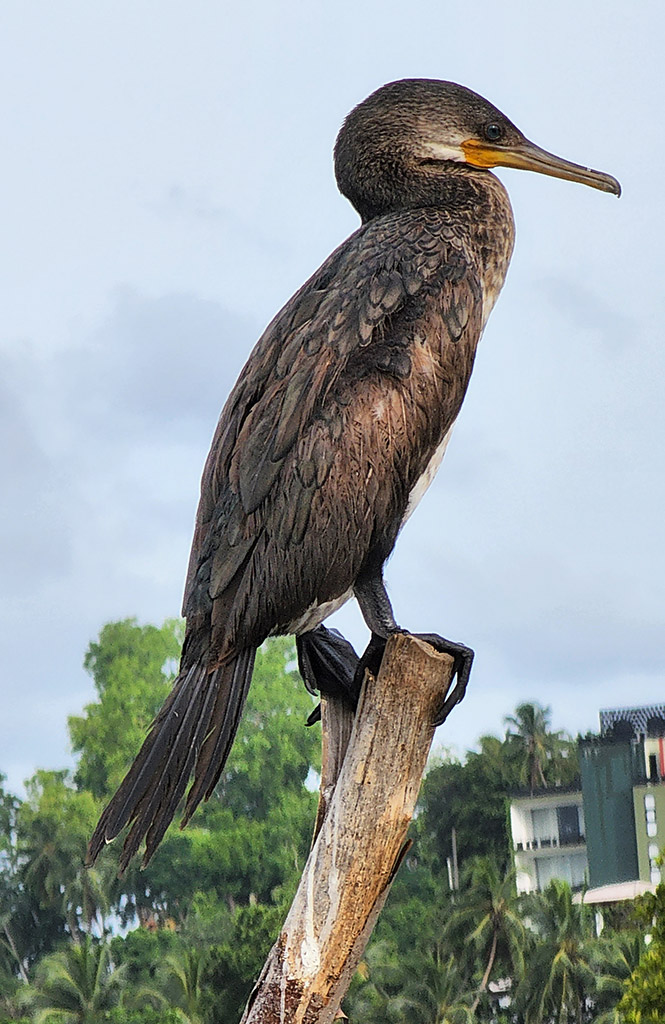
There were plenty of wetland birds to see. There were also several Brahmin Kites fishing in the river. Unfortunately, I could not catch them in action with my phone camera.
We headed into the part where the river opens up and turns into something like a lagoon. Our boatman guide informed us that there were several islands, including many that were inhabited. The largest had 250 families living on it and even had a school.
There are a couple of temples and devales on the water of note. Kothduwa, which is a fully functional temple with two resident monks, and the strangely named 5-cent island, which holds a small altar.
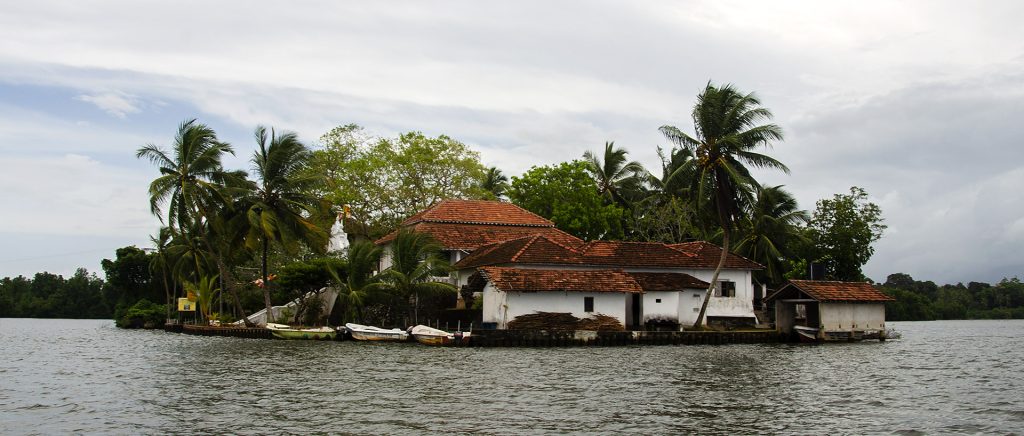
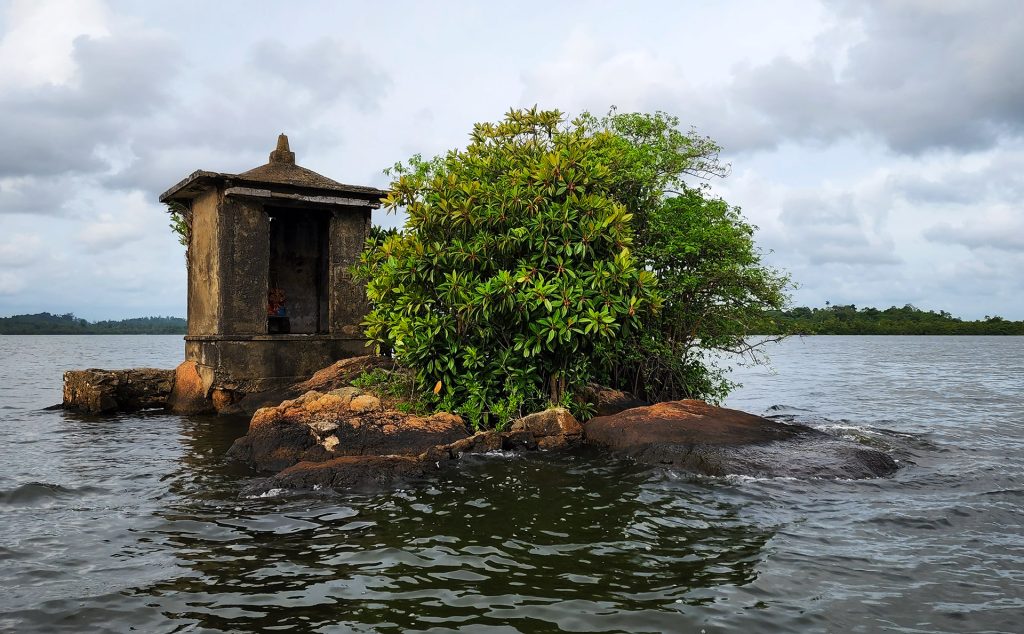
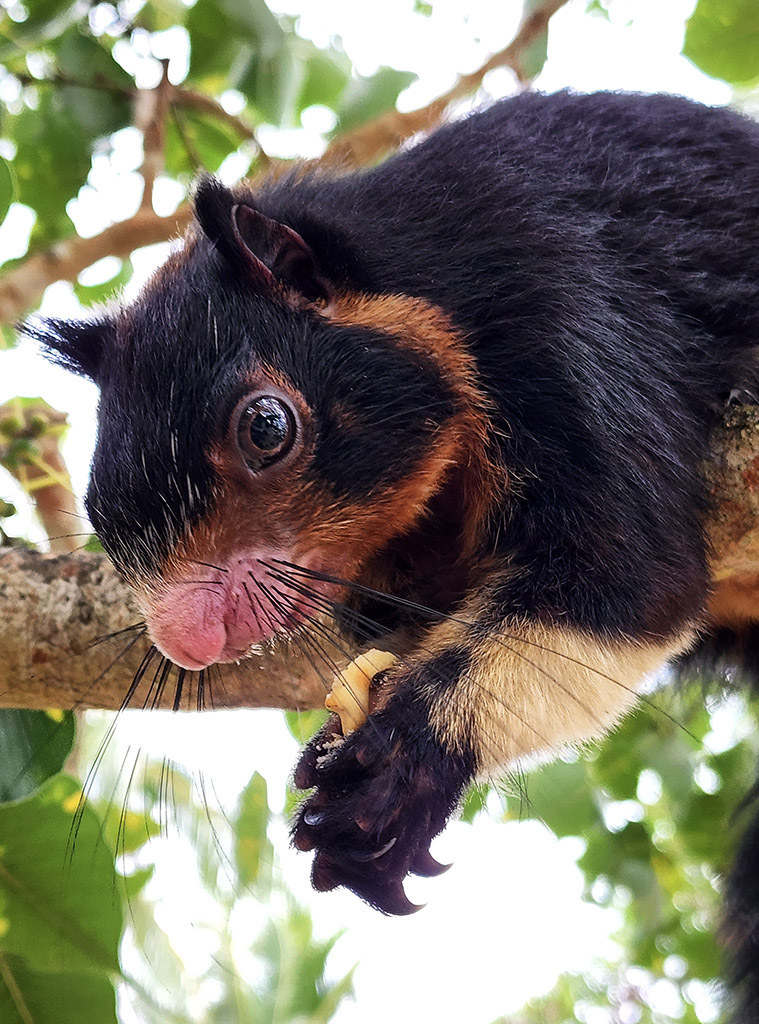
The island temple of Kothduwa has a special attraction for wildlife lovers – several giant squirrels in the bo tree. If you arrive equipped with snacks, they’ll come right down to the edge of a low hanging how and take them right from your hand.
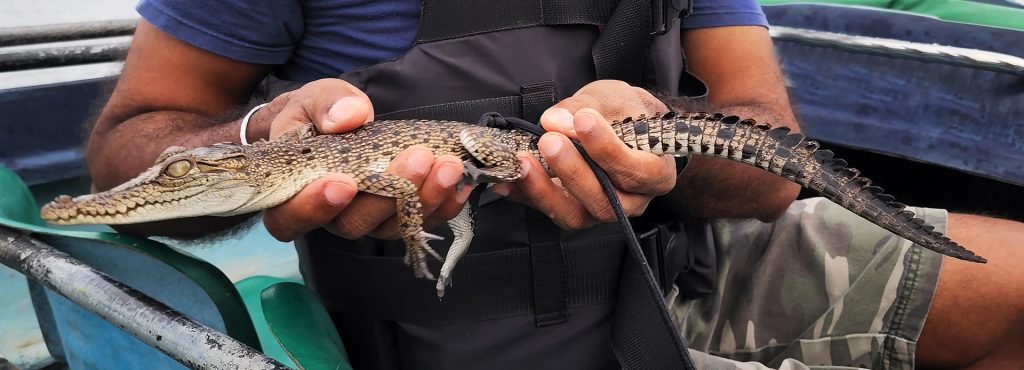
On our way back we found a man on a boat showing a baby crocodile to tourists. It had got caught in a prawn net and ended up with him. He explained how he made his living from this small creature. The one he showed us was about 6 months old. He said he fed it live fish that he put into the bottom of his boat. When it grew to about 1 year it would become unmanageable and then he would release it into the lagoon, and presumably find himself another one that got greedy and ended up on the prawn nets. We gave him also a small donation. These days you help where ever you can, with whatever little you can offer. People may argue about the morality of exploiting a wild animal for the benefit of a man – but it is equally important to consider whether this man and his family may starve if he doesn’t earn his living this way.
We also stopped at an island where a withered old man showed us how cinnamon was peeled. He has gnarly old hands with veins standing out, like ancient tree branches. He offered us pure natural cinnamon products. We purchased a few items including cinnamon sticks, cinnamon oil and cinnamon powder, which can be drunk like tea, maybe more to support the man than because we had needed these things.
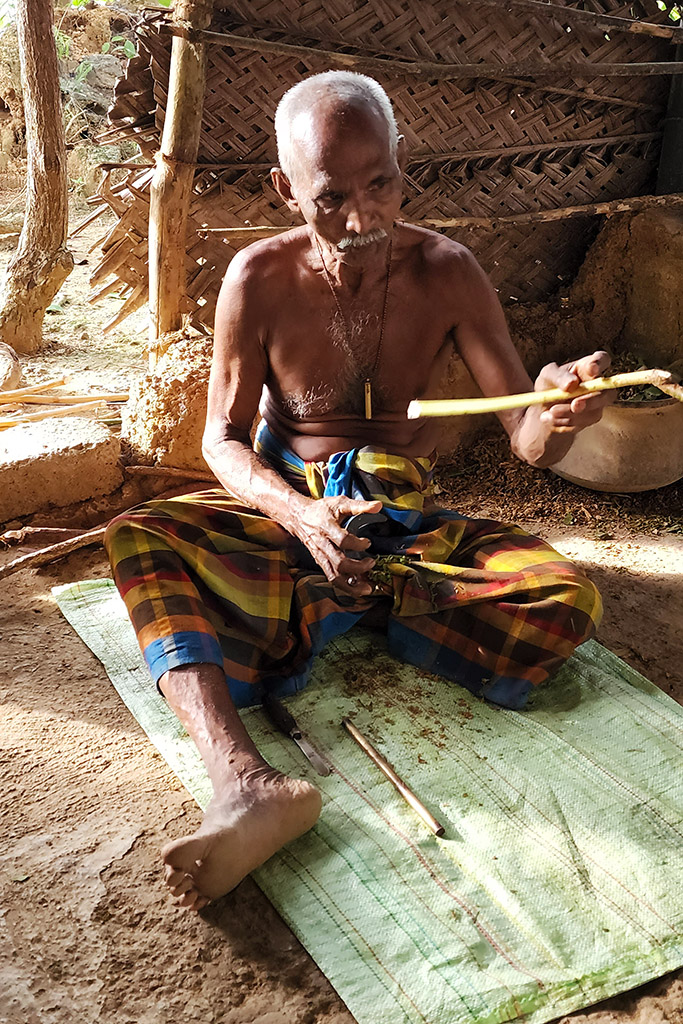
The light starts to fade; it was time to head back to our starting place. We give the boatman a generous tip. He tells us to refer our friends to him and welcomes us back any time. He says his name is Sudu, although there is nothing sudu about him. It’s a term of endearment people use, rather than as a literal adjective – somewhere a twisted old colonial prejudice hovers, like a ghost. We head back to our hotel, congratulating ourselves on an afternoon well spent.
This time there hotel is crawling with guests, Indians we speculate, and maybe some locals taking advantage of the offer. A lone drummer stands behind the metal detector and welcomes guests with a traditional beat – such a strange juxtaposition of the old and the new, old-world hospitality and new world security reality.
It’s another glorious few minutes under that warm deluge from the rain shower. We are in time for Happy Hour. We head to the olive for beers. The barman talks us into trying a Guinness – dark like crude oil, and strong with a smoky oak flavour. It’s an acquired taste, and the girls are in no mood to acquire it. We prefer our light lagers.
The main dining room is open for dinner on Saturday night. They have laid out a feast that truly boggles the mind. We settle in with stoic determination to do justice to the offerings.