 Chiranthi Rajapakse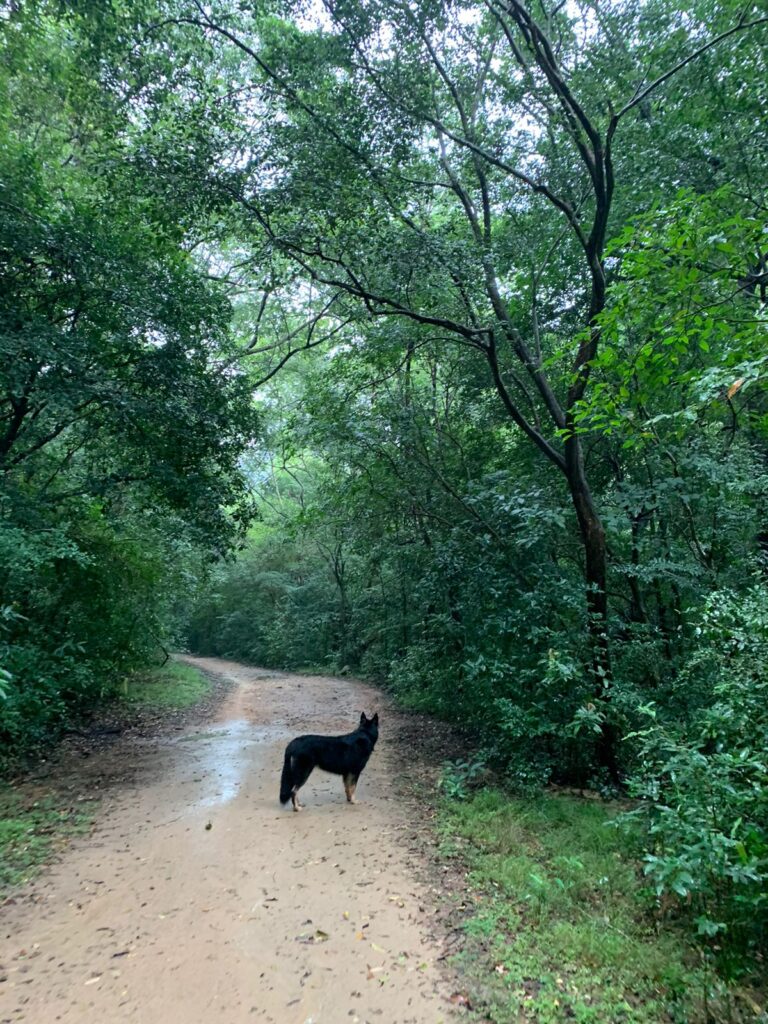
Kalu Diya Pokuna is a place we come to by accident. It bobs up on Google maps and at first we think it’s the more famous Kalu Diya Pokuna temple complex at Anuaradhapura. But this is Dambulla, and a different place altogether.
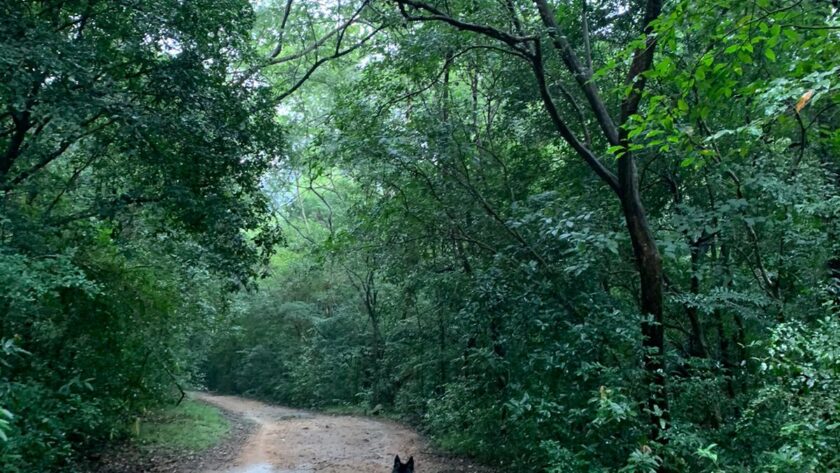
As you drive further from Dambulla town, the road gets narrower and more uneven. It starts as a regular gravel road which transforms into a narrow sandy path pitted with rocks. Kades and small houses are replaced by trees. The only sound is the noise of the car engine. It’s raining and sand becomes mud, the tires skid on the ground. There is the sharp, ominous sound of rock scraping against the under carriage. We leave the car parked by the side of the path and walk. And walk and walk. There is not another soul around. The rain is heavy now, there is the sound of thunder and birds chittering from the trees. Dog tries to catch birds and shadows in the forest. There is elephant dung on the road and no signal on our phones. I think of smashed cars, how fast elephants can move and whether Dog will forgive us for if we never find our way out of here. But Dog is unbothered, she trots on, her tail waving like a jaunty flag, she has to lead the sheep who might otherwise go astray. We turn a corner and before us – I have never been so happy to see one before – is a motor cycle. Other humans are here.
The motorcycle is parked next to a small hut – the local Archeological Department office. Two men are huddled inside, hiding from the rain and looking miserable. One waves us on, ‘Yanna, godak natabun thiyanava balanna’ – ‘Go in, go in,’
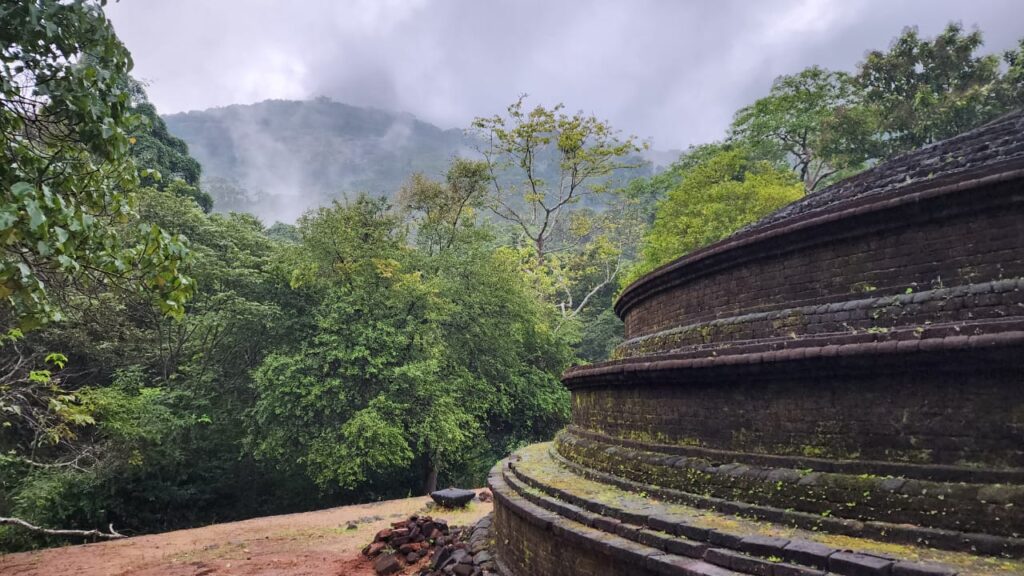
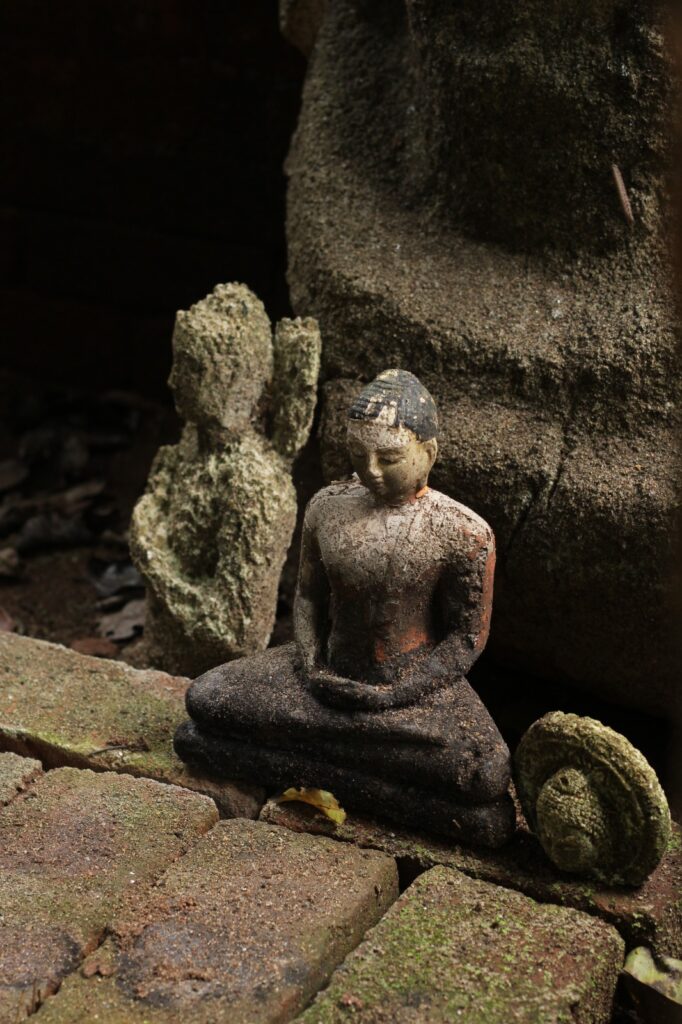
The archeological complex is huge and spread out. Before us is a chaitya of brown brick. Behind it the mist drifts up white and ghostly, half covering the mountains. It’s a place of quietness and it must have felt like this a thousand years ago. There are steps leading up to the chaitya, flanked by guard stones which are half worn away now. A few clay lamps have been placed on the stone platform before the chaitya.
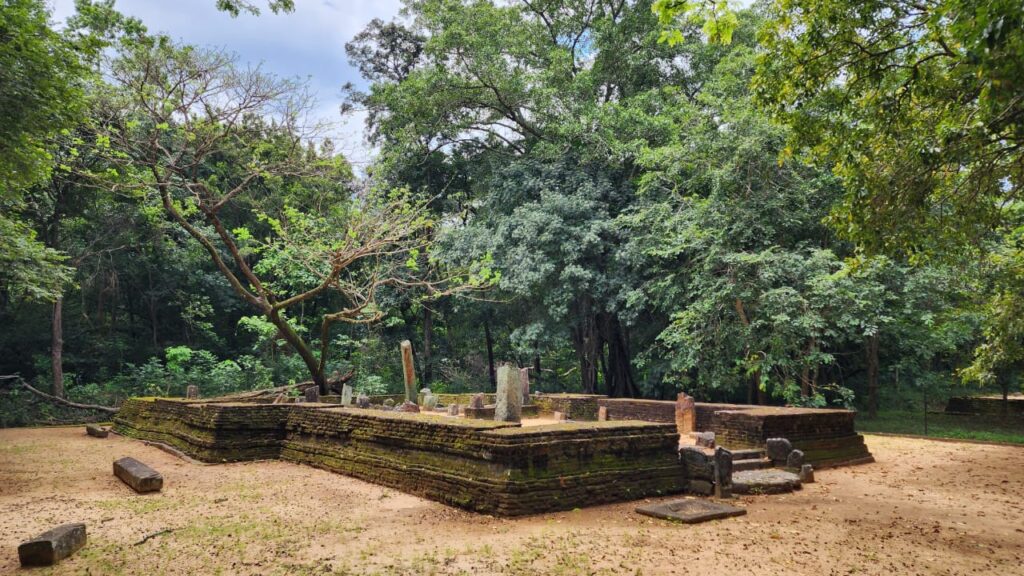
The complex is full of things which hint at the past. There are huge stone pillars which must have been the remnants of a two storey building. But the soul of the place is the stone and the caves. We can see dozens of caves, there must be hundreds. In one place a massive stone juts out looking like the face of a shark. A drip ledge has been cut in the rock so that a priest could sit underneath in the shelter of the rock. Next to another rock is a ‘toilet stone’ the kind which are found in museums in Anuradhapura. In the past this was a place for meditation, but also a place for monks to live. A man from the archaeology office joins us, in the past this was known as ‘Dhakkina stupaya’ and said to be built by King Sena II.
There are stone inscriptions and a translation has been put up next to one, ‘It mentions of the rules and regulations to be adhered to by the monks residing at the Dakkinagiri monastery temple officials, courtiers assigned to temple duties and temple workers. The inscription also mentions that any persons who break these rules and regulations will not have the fortune to see the Maitri Bodhisatva’
A thousand years after the words were written in stone, rules have been broken many times and the Maitri Bodhisatva has not come. But the inscription still stands.